কল্পনার গোল্লাছুটে যুক্তির দরবেশ!

International Mother Language Day special... and excursion in mathematical reason and imagination 

শোভাবাজারের মিত্র কাফেতে গিয়ে বসলাম। 'একটা পরোটা মাটন দিন দাদা'।

সময়টা ১৯৭৬ এর ফেব্রুয়ারি মাস। বাইরে তখনো একটু শীত শীত ভাব। হাতা গুটিয়ে পরোটায় হাত লাগাতে যাবো! এমনি সময় মোবাইলটা ট্যাঁ ট্যাঁ করতে শুরু করল।

মন দিয়ে পাঁঠা খাবো তার জো নেই এই দুনিয়ায়! নিউইয়র্ক থেকে সুমন্ত্র ফোন করছে।

ওখানে ও বছরখানেক হল রাজমিস্ত্রির কাজ করছে। বেশ টাকাও করে ফেলেছে। শনিবার রাত হলেই প্রচুর মদ্যপান করে। আর ফোন লাগায়। টাকা দিয়ে তো আর একাকীত্ত্ব ঘোচানো সম্ভব নয়।

'কি ভাই ইন্দিরা গান্ধী কি বলছে?'

ভিডিও কল। স্কাইপে। বুঝলাম পুরো খেজুর করার মুডে আছে খোকা।

'দুত্তোর ইন্দিরা গান্ধী! এখন তো সঞ্জয় গান্ধীর যুগ। সদ্য ভবিষ্যৎএর ভুতের প্রিন্ট গুলো ন্যানোর কারখানায় গিয়ে পুড়িয়ে এসেছেন জুনিয়ার গান্ধী।'

মিত্র কাফের লোকজন ততক্ষণে আমার দিকে এগিয়ে এসেছে।

' দাদা আপনার হাতের তেলোয় ও কি? কাঁচের মধ্যে দিয়ে আরেকটা মানুষ দেখা যাচ্ছে যে।'

আমি পাঁঠার টুকরো মুখে পুরতে পুরতে প্রফেটিক হাসি হাসলাম, ' Any sufficiently advanced technology is indistinguishable from magic.'

আর্থার সি ক্লার্ক বলেছিলেন সেই কবে। তারপর এই আমি বল্লাম।

পরের দিন দৈনিক যুগান্তরে হেডলাইন হল,

'উত্তর কলকাতায় কাঁচের মধ্যে দিয়ে দশ হাজার মাইল দূরের মানুষের সহিত কথা বলা যাইতেছে'

যথেষ্ট উন্নতমানের প্রযুক্তি খানিকটা ম্যাজিকের মত। আমরা ব্যবহার করতে করতে ভুলে যাই যে আজ থেকে পঞ্চাশ বছর আগেও এ সমস্ত অকল্পনীয় ছিল।

নিবিড় গণিতও খানিকটা ম্যাজিকের মত। তবে তাকে মনের চোখ দিয়ে দেখতে হয়। আমি গণিত করতে করতে এমন অনেক সত্যের মুখোমুখি হয়েছি , যা কল্পনাতেও আনা শক্ত। এ অনেকটা চাঁদের পাহাড়ের শঙ্করের মত। অনেক খাটাখাটনি করলে তবে পৌঁছনো যাবে সেই দেশে। একবার পৌঁছতে পারলে মনের চোখ ধাঁধিয়ে যাবে নির্ঘাত!

এরকম দু একটা অকল্পনীয় কল্পনার গল্প করতে বসেছি আজ।

যারা অঙ্ক বিন্দুমাত্র জানেন না, জানতে চান না, তাদেরও এই অবিশ্বাস্য যুক্তির মায়ার খেলা শুনতে ভালো লাগতে পারে।

১। অসীম অসংখ্য! (ক্যান্টর)

ক্যান্টর বললেন অসীম ব্যাপারটা কোনো একটা ব্যাপার নয়!

রবি ঠাকুর যখন গেয়ে ওঠেন, 'তোমার অসীমে প্রাণ মনে লয়ে', আমরা বুঝি অসীম ব্যাপারটা মস্ত ব্যাপার! একটা না শেষ হওয়ার গল্প।

কিন্তু কখনো কি ভাবি যে অসীমেরও ছোটো - বড় হতে পারে?

সে আবার কেমন? অসীম তো অসীমই! তার মধ্যে আবার মাত্রা ভেদ আছে নাকি?

এমনই এক অকল্পনীয় গল্প শুনিয়েছিলেন ক্যান্টর। ততকালীন গণিতজ্ঞরাও তাকে পাগল বলেছিল। অথচ এখন গোটা দুনিয়াই তার তত্ত্ব মেনে নিয়েছে।

ব্যাপারটা কি?

ক্যান্টর বললেন 'কতজন লোক সিনেমা দেখছে বুঝবে কি করে? জনে জনে গুনতে পারো। কিন্তু সে খুব কঠিন কাজ। হয়ত তুমি গুনতে শুরু করলে, আর কয়েকজন বাথরুমে চলে গেল। কেউ হয়ত হল ছেড়ে চা-তেষ্টা মেটাতে দেউরিতে গেলো। এই হাঙ্গামার মধ্যে নিঁখুত ভাবে গুনবে কি করে?

এক কাজ করো।

টিকিট বইটা দেখে নাও।

ব্যাস! যতগুলো টিকিট বিক্রি হয়েছে ততজনই দেখতে ঢুকেছে।

গোনাগুনতির এই পদ্ধতিকে 'বাইজেকশন' বলে। দুটো সেটের মধ্যে একই সংখ্যক বস্তু আছে কিনা বুঝতে হলে, দুটো সেটকে এমন ভাবে মেলানো যাচ্ছে কিনা দেখতে হবে।

যদি যায় তবে কেল্লাফতে। দুটোর মধ্যেই একই সংখ্যক বস্তু আছে।

এবার ক্যান্টর বললেন, 'গোটা সংখ্যা (1, 2, 3, 4...) যে অসীম সে আমরা সবাই জানি। কিন্তু যত গুলো জোড় সংখ্যা (2, 4, 6, 8...) আছে, গোটা সংখ্যাও ঠিক ততগুলো'।

তুমি তো রেগে কাঁই!

'সে কেমন ভাবে হবে? বিজোড় গুলো বাদ গেল যে।'

ক্যান্টর বলবেন, 'ও ভাবে নয়। মিলিয়ে দেখো'।

কি করে? বেশ। যদি x একটা গোটা সংখ্যা হয়, তার সাথে মিলিয়ে দাও 2x কে! এবার দেখো একটা নিয়ম পেলে। প্রতিটা গোটা সংখ্যার জন্য একটা করে জোড় সংখ্যা পাওয়া যাচ্ছে।

কি অদ্ভুত! বিজোড় গুলো তবে গেল কই?

এই যে তোমারও অদ্ভুত লাগছে এটাই মজা! কল্পনা পৌঁছতে পারছে না। ইন্টিউশন ফেল মেরে দিচ্ছে। এই আঁধারে যষ্টি হল একমাত্র 'reason'!

ক্যান্টর আরেকটু এগিয়ে বল্লেন, 'গোটা সংখ্যার চেয়ে গুঁড়ো সংখ্যা (real numbers) নির্ঘাত বেশি।'

কেন বাপু? দুটোই অসীম।

ক্যান্টর স্রেফ যুক্তি দিয়ে বলে দিলেন যে সে দুটো সেটকে 'মিলিয়ে দেখার' কোনো নিয়ম খুঁজেই পাওয়া যাবে না।

মিলিয়ে দেখার কোনও একটা নিয়ম খুঁজে বার করা তুলনামূলক ভাবে সহজ কাজ। কিন্তু কখনোই কোনও নিয়ম পাওয়া যাবে না! এ বড় কঠিন প্রস্তাব।

ক্যান্টরের যুক্তি জালের কথা আর বললাম না এখানে। যদি তুমি এ লেখা পড়ে সেসব খোঁজার চেষ্টা করো তাহলে বেশ হয়।

২। রাস্তাগুলোই সীমান্ত (গ্রোমোভ)

ভারতের সীমান্ত কোথায়?

গ্রোমোভকে বললে একটা অদ্ভুত উত্তর পাবে। গ্রোমোভ বলবেন, 'যে কোনো জায়গা থেকে শুরু করো। যেমন নিশ্চিন্দিপুর।'

বেশ!

'সেখানে থেকে যে কটা সিধে রাস্তা বেড়িয়েছে, মনে মনে তাদের একজোট করো।'

'করলাম'।

ব্যাস। কাম শেষ। এই একজোটে যাদের পেলে তারাই সীমান্ত।

ধাঁধা লেগে যাবে এসমস্ত শুনতে। এমনও হয়?

গ্রোমোভ পরশুরাম সম ঔদাসীন্যে বলবেন, 'হয়,Zআনতি পার না'

নিশ্চিন্দিপুর থেকে নির্গত সোজা পথগুলো (geodesic rays) -কে দিয়ে একটা সেট (set) বানানো যায়। গ্রোমোভ যুক্তিজাল বিস্তার করে দেখিয়েছিলেন যে এই সেট-টা একদম space -এর সীমান্তের মতই। একধরণের বিশেষ জগৎ-এ (space-এ) এমনটা হয়। সে জগৎ-এর নাম হল Delta hyperbolic space।

সে কেমন জগৎ?

বড়ই অদ্ভুতুরে। সেখানে একটা লাইনের সমান্তরাল অসীম সংখ্যক লাইন আঁকা যায়। আরো জানতে হলে যুক্তির সেই সুন্দর বাগানে পৌঁছে যেতে হবে। তার জন্য খাটতেও হবে খুব।

৩। আমার পথ চলাতেই আনন্দ (মাধবাচার্য্য)

কেরল দেশের মাধবাচার্য্য বললেন, 'গন্তব্য বলে কিছু নেই বাপু। পথটাই গন্তব্য।'

সে আবার কেমনতর কথা?

ধরো তুমি গুটি গুটি পায়ে শ্যামবাজারের দিকে হাঁটা দিলে। প্রথম ঘন্টায় অর্ধেক পথ গেলে। দ্বিতীয় ঘন্টায় বাকি অর্ধেকের অর্ধেক গেলে। অর্থাৎ মোট পথের ১/৪ ভাগ গেলে। পরের ঘন্টায় তারও অর্ধেক গেলে। এমনি করে তোমার 'চলা' চলতে থাকল।

গ্রীক দার্শনিক Zeno এই নিয়ে তুমুল বিতর্ক শুরু করেছিলেন। মাধবাচার্য্য অবশ্য সেসব ধার দিয়েও গেলেন না। উনি পষ্ট বললেন যে এই পথ চলাটাই হল শ্যামবাজার!

এমন করে ভাবতে গেলে সুবিধাই বা কি, অসুবিধাই বা কি?

আসলে এমনি ভাবে হাঁটতে গেলে অসীম সংখ্যক ঘন্টা কেটে যাবে (infinite sequence পাওয়া যাবে)। চলার ভঙ্গীটা যদি একটু বিশেষ ধরণের হয় তবে এই অসীম পদক্ষেপের মধ্যে নিহিত থাকবে একটি মাত্র গন্তব্য। এই যেমন একটু আগে বল্লাম। ঘন্টা যতই কাটুক, প্রতি ধাপে জড়িয়ে আছে শ্যামবাজারের পাঁচ মাথার ইঙ্গিত!

এমন করে যে কোনো সসীম সংখ্যাকে অসীম সংখ্যার মালা হিসেবে ভাবা যায়। সংখ্যামালা হচ্ছে সেই পথ। আর সসীম সংখ্যাটি হল গন্তব্য।

যেমন ধরো ১।

১ যদি গন্তব্য হয়, তাহলে পথ হতে পারে 0.9, 0.99, 0.999, 0.9999... । এই সংখ্যামালায় অসীম সংখ্যক সংখ্যা আছে। কিন্তু উপান্তে দাঁড়িয়ে আছে ১!

কিন্তু এমন করে ভাবব কেন?

কারণ যদি উপান্তে কে আছে নাও জানা থাকে, পথটাকেই সেই গন্তব্যের প্রতীক বলে ভেবে নেওয়া যাবে। অর্থাৎ সেই অসীম সংখ্যামালা কে গন্তব্য-সংখ্যার সমতুল্য ভাবা যাবে।

মাধবাচার্য্য এমন অনেক পথ (অনেক infinite sequence) খুঁজে বার করেছিলেন যাদের উপান্তে যে সংখ্যারা দাঁড়িয়ে তাদের মানুষ ভালো করে চেনে না।

কিরকম।

একটা বৃত্ত আঁকো। বৃত্তের পরীসীমাকে তুমি বৃত্তের ব্যাসার্ধর নিরিখে মাপতে পারবে?

ব্যাসার্ধ সরল রেখা। মাপা যাবে। তার নিরিখে যদি বৃত্তের বাঁকা রেখা কে মাপা যায়, তাহলে বক্রতাকে সারল্য দিয়ে ছুঁয়ে ফেলা সম্ভব!

'নিরিখে' মাপা যাবে মানে?

ধর ব্যাসার্ধকে দশ টুকরোতে ভাগ করলে। এই মাপের ষাটটা টুকরো নিলে। যদি বৃত্তের পরীসীমাকে টান টান করে দাও তবে তা এই ষাট টুকরোর চেয়ে একটু বড় হবে। বাষট্টি টুকরোর চেয়েও বড় হবে। কিন্তু ৬৩ টুকরোর চেয়ে ছোটো হবে।

তুমি আবার চেষ্টা করতে পারো। এই তেষট্টি তম টুকরোটাকে দশ ভাগে ভাগ করে, তার থেকে কতক গুলো নেওয়া যায়। কিন্তু আটটা নেওয়ার পর নয় নম্বরটা বসানো যাবে না। একটু কম হবে। আটের চেয়ে বেশি। নয়ের চেয়ে কম।

এমনি করে ক্রমাগত করে যেতে হবে। কিছুতেই শেষ হবে না মাপা।

মাধবাচার্য্য বললেন মাপার দরকার নেই। এই অসীম সংখ্যক মাপকেই পরীসীমার মাপ হিসেবে ধরতে হবে। এই অসীম সংখ্যামালাকেই গন্তব্য সংখ্যা হিসেবে কল্পনা করতে হবে।

চিন্তার জগৎ-এ এক বিপ্লব এসে পড়লো! সসীম সংখ্যাকে অসীম সংখ্যামালা হিসেবে ভাবতে হবে! এ যেন চরৈবেতি-র নতুন ব্যাখ্যা!

শেষ কথা

গণিত করতে করতে মনে হয় যে কল্পনা যেখানে থই খুঁজে পায় না, যুক্তি তাকে সেখানে পথ খুঁজতে সাহায্য করতে পারে। এ কথাটা সাধারণ ভাবে আমরা ভাবি না।

যুক্তিকে বড়ো কাঠখোট্টা ভদ্রলোকের মত মনে হয়। কল্পনা তার বিপ্রতীপে দাঁড়িয়ে থাকা এক অস্থির মতি বালিকা। সে যেন রেবা নদীর তীরে ছুটোছুটি করে খেলছে। আর যুক্তি তাকে বকাবকি করছে। শাসনে রাখতে চাইছে।

অথচ ব্যাপারটা হয়ত একটু অন্যরকম। হয়ত কল্পনা এক বৃত্তে ছুটে চলেছে। যুক্তি সেখানে এক দরবেশের মত এসে হাজির। সে তাকে নতুন পথ দেখিয়ে নিয়ে যাবে আরও উন্মুক্ত অস্থিরতায়।

আর আমরা যারা পড়ুয়া তারা মালবিকার মত অনিমিখে তাকিয়ে থাকব পথের দিকে। কে জানে অগ্নিমিত্র আসবেন কিনা!

আরো পড়তে পারোঃ

  1. Cantor's Diagonalization Argument
  2. Gromov Boundary
  3. Madhava-Gregory series

Really understanding Barycentric coordinates

Sometimes we are interested in the relative position of a point with respect to a triangle.

Is it close to the vertices?

Is it closer to one of the sides compared to the other sides?

This brings home the notion of mass point coordinates or barycentric coordinates.

Here is the recipe.

Motivation - See Saw

The initial idea is very simple. Imagine a seesaw. Usually, the fulcrum is in the middle, right? What masses should you put on both ends to balance this seesaw? Of course, equal masses will work. For example, we could put 1 mass at each of the endpoints. Also, a mass of 10 at each endpoint will equally work.

This brings us to the most rudimentary form of barycentric coordinate.

Masspoint coordinate of the fulcrum is (1, 1) or (10, 10); the masses that we need to put at the end points to balance the seesaw.

How will this change if we shift the fulcrum?

Archimedes Principle of Livers

Archimedes Principle

Greek mathematician Archimedes once said, "Give me a place to stand, and I shall move the Earth with it". He would need a fulcrum and a long enough lever.

Suppose F is the fulcrum. If mass of \( M_1 \) and \( M_2 \) balances the lever about F, then according to archimedes principle we have \( M_1 \times AF = M_2 \times BF \).

The barycentric coordinate of F is \( M_1, M_2 \). Note that any constant multiple of \(M_1, M_2 \) will also work. (Why? After all, if we have \( M_1 \times AF = M_2 \times BF \) then, we definitely have \( k \cdot M_1 \times AF = k \cdot M_2 \times BF \)). This implies that if F has a barycentric coordinate \( ( M_1 , M_2 \) then it has infinitely many other barycentric coordinates of the form \( ( k \cdot M_1 , k \cdot M_2 \).

Toward triangle

We understand how fulcrums work for livers. What about 'three-vertex' livers?

What masses should we put at A, B and C such that the entire system is balanced about the fulcrum P?

In order to figure that out, first join BC and extend AP to meet it at Q.

Construction of Mass point coordinate of P

First balance BC about Q. For example, we may compute the length of BQ and QC. Put the mass worth [BQ] at C and [QC] at B. The segment BC is balanced about Q.

Next, shrink BC to the point Q, such that the entire mass on BC (that is the mass at B + mass at C) is now concentrated at Q. According to our previous assumption, the mass at Q is [BQ] + [QC].

Finally compute the length of AP and PQ. Suppose the mass of x at A will balance everything out. Then \( x \cdot AP = ([BQ] + [QC]) \times PQ \). This gives us an expression for x.

x = mass at A = \( \frac{([BQ] + [QC]) \times PQ}{AP} \)

All this 'balancing out' tricks sound nice. How does it all fit together with geometry? That is what we will learn next.

Barycentric coordinate for Math Olympiad 1

Barycentric coordinates can be very useful in solving advanced geometry problems for math olympiad. We take a leaf of Cheenta lectures on this idea.

Also see

Math Olympiad Program at Cheenta

Cheenta @ This Week

[et_pb_section fb_built="1" admin_label="Hero Section" _builder_version="3.19.8" background_color="#d3dae4" custom_margin="60px|60px|60px|60px" custom_margin_phone="0px|0px|0px|0px" custom_margin_last_edited="on|phone" custom_padding="19px|0px|31px|0px|false|false" collapsed="off"][et_pb_row make_fullwidth="on" custom_width_px="1280px" custom_padding="|||" padding_top_2="40px" padding_bottom_2="40px" _builder_version="3.19.8" collapsed="off"][et_pb_column type="1_2" _builder_version="3.0.47"][et_pb_image src="https://cheenta.com/wp-content/uploads/2019/01/boutique_48-1.jpg" align="center" _builder_version="3.0.105" custom_margin="|||" animation_style="slide" animation_direction="right" animation_intensity_slide="4%" animation="off"][/et_pb_image][/et_pb_column][et_pb_column type="1_2" _builder_version="3.0.47"][et_pb_text admin_label="Subtitle" _builder_version="3.0.105" text_font="Roboto|on||on|" text_text_color="#2a2a2a" text_font_size="18px" text_letter_spacing="4px" animation_style="zoom" animation_direction="left" animation_intensity_zoom="10%"]

March 18 to 24

[/et_pb_text][et_pb_text admin_label="Title" _builder_version="3.0.105" text_font="||||||||" header_font="||||||||" header_2_font="Roboto|700||on|||||" header_2_font_size="52px" header_2_font_size_tablet="40px" header_2_font_size_last_edited="on|desktop" header_2_letter_spacing="4px" header_2_line_height="1.2em" custom_margin="||20px|" custom_padding="|||" animation_style="zoom" animation_direction="left" animation_delay="50ms" animation_intensity_zoom="10%"]

[/et_pb_text][et_pb_text _builder_version="3.19.8" text_font="||||||||" text_line_height="1.8em" header_font="||||||||" custom_margin="|||" custom_padding="|||" animation_style="zoom" animation_direction="left" animation_delay="100ms" animation_intensity_zoom="10%"]

January brings great news!

Sambuddha got an offer from Cambridge. Aditya got multiple offers including one from Oxford. Soumyadeep cracked the TIFR entrance! We feel ecstatic. The entire credit goes to the students. We feel awesome to be a part of their journey. 

[/et_pb_text][/et_pb_column][/et_pb_row][/et_pb_section][et_pb_section fb_built="1" admin_label="Features" _builder_version="3.0.65" custom_padding="20px||17px||false|false" collapsed="off"][et_pb_row _builder_version="3.0.65" collapsed="off"][et_pb_column type="1_3" _builder_version="3.0.47"][et_pb_text admin_label="Number" _builder_version="3.0.105" text_font="Roboto||||" text_text_color="#2a2a2a" text_font_size="60px" custom_margin="|||" custom_padding="||10px|" animation_style="fade"]01 [/et_pb_text][et_pb_text admin_label="Title" _builder_version="3.0.105" text_font="||||||||" header_font="||||||||" header_2_font="||||||||" header_4_font="Roboto|700||on|||||" header_4_letter_spacing="1px" header_4_line_height="1.4em" custom_margin="||10px|" custom_padding="|||" animation_style="fade"]

Problem lIst

[/et_pb_text][et_pb_divider color="#ffb500" divider_weight="2px" disabled_on="on|on|off" _builder_version="3.2" max_width="50px" animation_style="fade"][/et_pb_divider][et_pb_text _builder_version="3.0.105" text_font="||||||||" text_line_height="1.8em" custom_margin="-30px|||" animation_style="fade"]

Download 

[/et_pb_text][et_pb_text admin_label="Title" _builder_version="3.19.8" text_font="||||||||" header_font="||||||||" header_2_font="||||||||" header_4_font="Roboto|700||on|||||" header_4_letter_spacing="1px" header_4_line_height="1.4em" custom_margin="||10px|" custom_padding="|||" animation_style="fade"]

Selected Combinatorics Problems From AMC10/12

[/et_pb_text][et_pb_divider color="#ffb500" divider_weight="2px" disabled_on="on|on|off" _builder_version="3.2" max_width="50px" animation_style="fade"][/et_pb_divider][et_pb_text _builder_version="3.0.105" text_font="||||||||" text_line_height="1.8em" custom_margin="-30px|||" animation_style="fade"]

Download 

[/et_pb_text][/et_pb_column][et_pb_column type="1_3" _builder_version="3.0.47"][et_pb_text admin_label="Number" _builder_version="3.0.105" text_font="Roboto||||" text_text_color="#2a2a2a" text_font_size="60px" custom_margin="|||" custom_padding="||10px|" animation_style="fade" animation_delay="100ms"]02 [/et_pb_text][et_pb_text admin_label="Title" _builder_version="3.0.101" text_font="||||||||" header_font="||||||||" header_2_font="||||||||" header_4_font="Roboto|700||on|||||" header_4_letter_spacing="1px" header_4_line_height="1.4em" custom_margin="||10px|" custom_padding="|||" animation_style="fade"]

hints if you need

[/et_pb_text][et_pb_divider color="#ffb500" divider_weight="2px" disabled_on="off|off|off" _builder_version="3.2" max_width="50px" animation_style="fade" locked="off"][/et_pb_divider][et_pb_text _builder_version="3.0.105" text_font="||||||||" text_line_height="1.8em" custom_margin="-30px|||" animation_style="fade" locked="off"]

Download

[/et_pb_text][/et_pb_column][et_pb_column type="1_3" _builder_version="3.0.47"][et_pb_text admin_label="Number" _builder_version="3.0.105" text_font="Roboto||||" text_text_color="#2a2a2a" text_font_size="60px" custom_margin="|||" custom_padding="||10px|" animation_style="fade" animation_delay="200ms" locked="off"]03 [/et_pb_text][et_pb_text admin_label="Title" _builder_version="3.0.101" text_font="||||||||" header_font="||||||||" header_2_font="||||||||" header_4_font="Roboto|700||on|||||" header_4_letter_spacing="1px" header_4_line_height="1.4em" custom_margin="||10px|" custom_padding="|||" animation_style="fade" locked="off"]

brilliant Mathematics this week!

[/et_pb_text][et_pb_divider color="#ffb500" divider_weight="2px" disabled_on="on|on|off" _builder_version="3.2" max_width="50px" animation_style="fade" locked="off"][/et_pb_divider][et_pb_text _builder_version="3.0.105" text_font="||||||||" text_line_height="1.8em" custom_margin="-30px|||" animation_style="fade" locked="off"]

Download

[/et_pb_text][/et_pb_column][/et_pb_row][/et_pb_section]

Sign Pyramid - AMC 8 2018 Problem 19

Big idea - stabilization

In a counting problem, you may need to stabilize the number of cases. This means, by letting some of the variables change, one may fix the remaining cases.

This is the central idea in the following problem from American Mathematical Contest 8 (AMC 8, 2018, Problem 9).

Also see

Advanced Math olympiad program

Problem

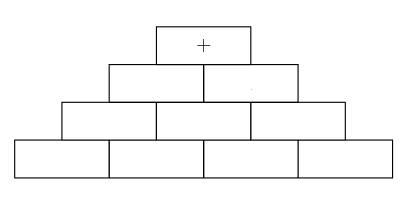
In a sign pyramid a cell gets a "+" if the two cells below it have the same sign, and it gets a "-" if the two cells below it have different signs. The diagram below illustrates a sign pyramid with four levels. How many possible ways are there to fill the four cells in the bottom row to produce a "+" at the top of the pyramid?

amc 8 2018 problem 19

Sequential Hints


(How to use this discussion: Do not read the entire solution at one go. First, read more on the Key Idea, then give the problem a try. Next, look into Step 1 and give it another try and so on.)

Hint 1

Start from the top! Fix the + sign at the top of the pyramid and try filling in the second row from left. Do you see any pattern?

(What happens if you plugin a + sign in the left most block of second row from top?)

Start from the top!

Hint 2

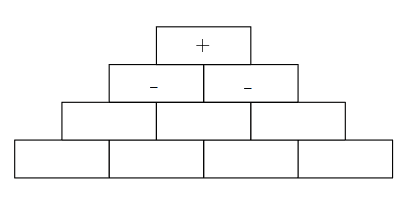
If we fix a + sign in the left most block of second row from top, the other box must contain a + sign. (Why?)

On the other hand fixing a - sign in the left most block of second row from top will force the remaining block to contain - sign.

Thus by varying the left most block of the second row, we can fix the entire row.

Will this work for the third row?

amc 8 2018 problem 19 part 2a
amc 8 2018 problem 19 part 2b

Hint 3

In fact the same trick will work for third row.

Try this. Fix a plus sign in the first row. Then fix second row as well ( plus, plus or minus, minus).

Then try to plugin some sign in the third row's first block. And check that the remaining two blocks get automatically fixed. This is precisely known as stabilization.

Final Hint

Thus, we should only worry about the first block of second, third and fourth. Fixing them fixes the entire row.

There are 2 choices for the first block of second row, 2 choices for first block of third row and 2 choices for first block of third row. Hence in total we have \( 2 \times 2 \times 2 = 8 \) cases.

Recommended book

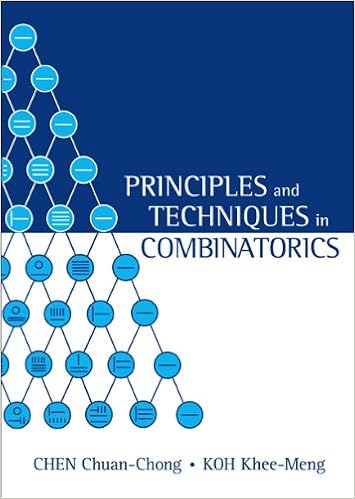
Principles and Techniques in Combinatorics Kindle Edition by Chen Chuan-Chong

Try chapter 1.

Applying in Oxford - Warwick after high school

[et_pb_section fb_built="1" next_background_color="#f7f7f7" admin_label="Hero Section" _builder_version="3.0.91" use_background_color_gradient="on" background_color_gradient_start="rgba(0,0,0,0.4)" background_color_gradient_end="rgba(0,0,0,0.4)" background_color_gradient_overlays_image="on" background_image="https://cheenta.com/wp-content/uploads/2019/01/writer-01.jpg" background_position="center_right" custom_padding="10%||16%|" bottom_divider_style="slant" bottom_divider_height="60px" background_color_gradient_direction__hover="180deg" background_color_gradient_direction__hover_enabled="180deg" background_color_gradient_start_position__hover="0%" background_color_gradient_start_position__hover_enabled="0%" background_color_gradient_end_position__hover="100%" background_color_gradient_end_position__hover_enabled="100%"][et_pb_row _builder_version="3.0.91"][et_pb_column type="4_4" _builder_version="3.0.47" parallax="off" parallax_method="on"][et_pb_text admin_label="Hero Section Title" _builder_version="3.0.91" text_font="|||on|||||" header_font="Montserrat|600|||||||" header_font_size="48px" header_font_size_phone="28px" header_font_size_last_edited="on|phone" header_letter_spacing="3px" header_line_height="1.3em" header_2_font="Montserrat|700|||||||" header_2_text_color="rgba(255,255,255,0.6)" header_2_font_size="90px" header_2_font_size_phone="50px" header_2_font_size_last_edited="on|phone" header_2_letter_spacing="3px" header_2_line_height="1.1em" text_orientation="center" background_layout="dark" module_alignment="center" custom_margin="||60px|" animation_style="slide" animation_direction="bottom" animation_intensity_slide="5%"]

cheenta seminar

oxford - warwick: how to apply after school

[/et_pb_text][/et_pb_column][/et_pb_row][/et_pb_section][et_pb_section fb_built="1" admin_label="About Section" _builder_version="3.0.91" background_color="#f7f7f7" custom_padding="90px||90px|"][et_pb_row custom_padding="27px|0px|27px|0px" custom_margin="|||" admin_label="Section Title" _builder_version="3.0.91" locked="off"][et_pb_column type="4_4" _builder_version="3.0.47" parallax="off" parallax_method="on"][et_pb_text admin_label="Title" _builder_version="3.0.91" text_font="||||||||" header_font="||||||||" header_2_font="Montserrat|600||on|||||" header_2_text_align="center" header_2_font_size="30px" custom_margin="||5px|" animation_style="slide" animation_direction="top" animation_intensity_slide="20%" animation_starting_opacity="100%"]

one Trick Pony

[/et_pb_text][et_pb_divider show_divider="off" _builder_version="3.2" max_width="23px" module_alignment="center" animation_style="slide" animation_direction="top" animation_intensity_slide="20%" animation_starting_opacity="100%"][/et_pb_divider][et_pb_text admin_label="Title" _builder_version="3.0.91" text_font="Montserrat|300|||||||" text_text_color="#878787" text_font_size="25px" text_line_height="1.8em" link_font="||||on|||#f46624|" link_text_color="#333333" header_font="||||||||" header_2_font="Montserrat|600||on|||||" header_2_text_align="center" header_2_font_size="30px" text_orientation="center" max_width="800px" module_alignment="center" custom_margin="||40px|" animation_style="slide" animation_direction="top" animation_intensity_slide="20%" animation_starting_opacity="100%"]

Admission process of Oxford - Warwick - Ecole and other European universities can be tricky. In this seminar we will have a live conversation with a Cheenta student who has experienced this process successfully. We explored the admission process, understand what preparation and tests are required and

[/et_pb_text][/et_pb_column][/et_pb_row][et_pb_row _builder_version="3.19.8"][et_pb_column type="4_4" _builder_version="3.19.8" parallax="off" parallax_method="on"][et_pb_video src="https://youtu.be/0sT_sugEl-4" _builder_version="3.19.8"][/et_pb_video][/et_pb_column][/et_pb_row][/et_pb_section]

Understanding Simson Lines

Imagine a point P floating in the plane of a triangle ABC. How far is this point from the sides of the triangle?

A point P is floating in the plane of a triangle ABC

Think: Suppose ABC is a triangle. Specify three positive numbers: x, y, z (for example 2, 3, 4.9). Is it possible to find a point P which is x unit away from AB, y unit away from BC and z unit away from CA?

If we think of the triangle ABC as a reference structure, it is immediately useful to find the distance of P from each of the sides.

Drop perpendiculars from P on the sides (or extended sides) of ABC. Suppose \( A_1, B_1, C_1 \) are the feet of the perpendiculars from P on BC, CA, AB respectively.

The triangle \( A_1, B_1 C_1 \) is known as Pedal Triangle. (The position of a P at a specific instance is known as the pedal point).

As the point, P floats on the plane of the triangle ABC, what happens to the pedal triangle?

Theorem: Pedal triangle thins out (degenerate) into a line as P floats to the circumference of triangle ABC. That is \( A_1, B_1, C_1 \) are collinear if and only if P is on the circumference of triangle ABC.

This is a well know theorem. Try to prove this using simple angle chasing.

Pedal Triangle
Pedal Triangle
P goes to circumference -> Pedal Triangle thins out to become a line

What if a Simson Line moves!

This is the story of a deltoid.

It is known as Steiner Hypocycloid.

It looks like a curved sided triangle. And it is traced out by something called a Simson line.

Let us start the story from the beginning.

We have a triangle ABC. We draw its circumcircle. And we pick any point P on the circumcircle.

Next drop, perpendiculars from P to the sides of the triangle. We may have to extend the sides to mark the feet of the perpendiculars.

Alright, so you have this picture now. Suppose the feet of the perpendiculars are A1, B1, and C1.

It is a well-known theorem that these feet of perpendiculars, that is A1, B1, and C1 are collinear. That is they lie on the same straight line. In fact, this is not hard to prove. Why don’t you prove this using basic angle chasing?

This line on which A1, B1, and C1 are located, is known as the Simson Line. Apparently, someone else called Wallace proved this first.

Next, we will do an experiment with this Simson Line. We will move the point P along the circumference of this circle.

As P runs along the circumference the Simson line also moves and it envelops or creates a very beautiful symmetric structure which is looking like a curved triangle. This is precisely the Steiner Hypocycloid.

This was first discovered by Steiner in the middle of 19th century.

Ekalavya, I(N)MO Camp, and Research Track

Hello mathematician!

The Indian National Math Olympiad is around the corner. Cheenta INMO Camp is in full swing now. There are five sessions every week. From Graph Theory to Geometric transformation, we are experiencing some high-caliber math-magic in our classrooms.

Find out more about I(N)MO Camp

We dream to train an IMO perfect-team one day. There has been only one such team in the history of International Math Olympiad: 1994 US Team. There were a record-breaking six perfect scores that year in Hong Kong that year.

Then there are bigger dreams. We wish to facilitate world-class research in mathematical science in our soil. This is indeed Cheenta's long-term vision. Recently we launched the Research-Track program. It is a unique program for advanced school and college students who wish to pursue research early on.

Many of the Cheenta alumni and faculty members are engaged in world-class research at leading universities around the world. We have students in Oxford, UIUC, Edinburgh, I.S.I., TIFR, UT Austin, M.I.T., to name a few places. More importantly, we make it a point to keep in touch with these bright people over the years. They often advise our existing students, conduct seminars. or teach courses. For example one of our existing students had an interview at Oxford (for B.Sc. program) last week. We could easily create an advising cum mock interview session with the help of our alumni at Oxford.

This growing network of bright alumni spread over several continents is indeed one of Cheenta's greatest strengths.

Learn more about Research Track

Yesterday I read a frightening news. A young girl committed suicide as she was forced to leave school and work at a Biri factory. The reporter wrote, 'the girl loved to learn. She went into depression when she was forced to leave school due to economic pressure.'

We should all feel responsible for this incident. It is our collective sin.

EklavyaCheenta has Ekalavya Scholarship program. We give a full tuition waiver to deserving economically challenged students. Not only that, we award a small stipend for other expenses as well.

Today I urge you to be an ambassador of Cheenta's Ekalavya program. if you know even one kid who is talented but limited by resources, help him/her to find Cheenta. Every life counts!

An exciting week lies ahead of us. Here is the timetable:

Cheenta Mains _ December 17 - 23 - Schedule

Regards,

Ashani Dasgupta
Cheenta

Passion for Mathematics

Spiral Similarity of cyclic quadrilaterals

ABC be any triangle. P is any point inside the triangle ABC. ( PA_1, PB_1, PC_1 ) be the perpendiculars dropped from P on the sides BC, CA and AB respectively. ( A_1 B_1 C_1) constitutes a pedal triangle.

Also see

Advanced Math Olympiad Program

Drop perpendiculars from P on ( A_1 B_1, , B_1 C_1, C_1 A_1 ) at ( C_2, A_2, B_2 ) respectively. ( A_2 B_2 C_2 ) known as the second pedal triangle.

Finally, repeat the process to have the third pedal triangle (A_3 B_3 C_3 ).

Proposition (easy angle chasing): The third pedal triangle is similar to the original triangle ( ( \Delta ABC \sim \Delta A_3 B_3 C_3 ) )

Spiral Similarity Cyclic Quadrilateral Pedal triangle

Spiral Similarity

Notice that quadrilateral ( q_1 = P A_1 B C_1 ) is cyclic (why?). Rotate ( q_1 ) by ( 180^\circ ) and dilate it by a factor of ( \frac {1}{8} ). This spiral similarity sends the vertex B to ( B_3 ).

Exercise 1: Proof this using complex bashing or otherwise.

Exercise 2: Normalize by recreating the process in an equilateral triangle.

Remark: It is interesting to note that ( P A_1 B C_1 ) appears to be spirally similar to ( PB_2 C_1 A_2 ) and ( PC_3 A_2 B_3 ) but that does not happen.