New AMC 10 & 12 Review Course

Cheenta is offering a 36-hour program on AMC 10 & 12. In this short review course, we will cover concepts from Number Theory, Geometry, Algebra, and Combinatorics. This course is problem-driven in nature, in the sense concepts will be introduced and taught using relevant problems.

Schedule

The program starts on September 9th. The online live class Group A meets on Saturday and Sunday at 6 AM IST. The Group B meets on Saturday and Sunday at 5:30 PM IST. That is we have two time slots. You may choose any one.

Curriculum and Other Details

Apply for Trial Class

AMC 10A 2020 Problem 6 | Divisibility Problem

Try this beautiful Problem based on Divisibility Problem from AMC 2020 Problem 6.

Divisibility Problem: AMC 10A 2020 Problem 6


How many 4-digit positive integers (that is, integers between 1000 and 9999 , inclusive) having only even digits are divisible by 5 ?

Key Concepts


Divisibility

Counting Principle

Suggested Book | Source | Answer


AMC 10A 2020 Problem 6

100

Try with Hints


What is the divisibility rule for a number divisible by 5?

Now apply this for unit, tens, hundred and thousand digits.

Here the unit digit must be 0. So I just have one choice for units place.

The middle two digits can be 0, 2, 4, 6, or 8.

But the thousands digit can only be 2, 4, 6, or 8 since it cannot be zero.

Now try to count how many choices are there for each position.

Then there was 1 choice for unit digit.

5 choices for middle two digits.

4 choices for thousands digit.

Now calculate the total number of choices you can make.

AMC-AIME Program at Cheenta

Subscribe to Cheenta at Youtube


AMC 10A 2021 Problem 9 | Factorizing Problem

Try this beautiful Problem based on Factorizing Problem from AMC 2021 Problem 9.

Factorizing Problem: AMC 10A 2021 Problem 9


What is the least possible value of $(x y-1)^{2}+(x+y)^{2}$ for real numbers $x$ and $y$ ?

Key Concepts


Expansion of Polynomial

Factorization

Suggested Book | Source | Answer


AMC 10A 2021 Problem 9

1

Try with Hints


Expand the expression.

So, we get that the expression is $x^{2}+2 x y+y^{2}+x^{2} y^{2}-2 x y+1$ or $x^{2}+y^{2}+x^{2} y^{2}+1$.

Then the minimum value for this is 1 , which can be achieved at $x=y=0$. .

AMC-AIME Program at Cheenta

Subscribe to Cheenta at Youtube


AMC 10A 2021 I Problem 20 | Enumeration

Try this beautiful Problem based on Enumeration appeared in AMC 10A 2021, Problem 20.

AMC 10A 2021 I Problem 20


In how many ways can the sequence $1$, $2$, $3$, $4$, $5$ be rearranged so that no three consecutive terms are increasing and no three consecutive terms are decreasing?

Key Concepts


Permutation

Enumeration

Combinatorics

Suggested Book | Source | Answer


An Excursion in Mathematics

AMC 10A 2021 Problem 20

32

Try with Hints


We have 5 numbers with us.

So, how many permutations we can have with those numbers?

So, $5!=120$ numbers can be made out of those $5$ numbers.

Now we have to remember that we are restricted with the following condition -

no three consecutive terms are increasing and no three consecutive terms are decreasing.

Now make a list of the numbers which are satisfying the condition given among all $120$ numbers we can have.

Now the list should be -

$13254$, $14253$, $14352$, $15243$, $15342$, $21435$, $21534$, $23154$, $24153$, $24351$, $25143$, $25341$
$31425$, $31524$, $32415$, $32514$, $34152$, $34251$, $35142$, $35241$, $41325$, $41523$, $42315$, $42513$,
$43512$, $45132$, $45231$, $51324$, $51423$, $52314$, $52413$, $53412$.

Count how many permutations are there?

Subscribe to Cheenta at Youtube


Pigeonhole Principle

“The Pigeonhole principle” ~ Students who have never heard may think that it is a joke. The pigeonhole principle is one of the simplest but most useful ideas in mathematics. Let’s learn the Pigeonhole Principle with some applications.

Pigeonhole Principle Definition:

In Discrete Mathematics, the pigeonhole principle states that if we must put $N + 1$ or more pigeons into N Pigeon Holes, then some pigeonholes must contain two or more pigeons.

Example:

If $Kn+ 1$ (where k is a positive integer) pigeons are distributed among n holes than some hole contains at least $k + 1$ pigeons.

Applications of Pigeonhole Principle:

This principle is applicable in many fields like Number Theory, Probability, Algorithms, Geometry, etc.

Problems and Solutions:

Problem 1

A bag contains beads of two colours: black and white. What is the smallest number of beads which must be drawn from the bag, without looking so that among these beads, two are of the same colour?

Solution: We can draw three beads from bags. If there were no more than one bead of each colour among these, then there would be no more than two beads altogether. This is obvious and contradicts the fact that we have chosen their beads. On the other hand, it is clear that choosing two beads is not enough. Here the beads play the role of pigeons, and the colours (black and white) play the role of pigeonhole.

Problem 2

Find the minimum number of students in a class such that three of them are born in the same month?

Solution: Number of month $n =12$

According to the given condition,

$K+1 = 3$

$K = 2$

$M = kn +1 = 2×12 + 1 = 25$.

Problem 3

Show that from any three integers, one can always choose two so that $a^3$b – a$b^3$ is divisible by 10.

Solution: We can factories the term $a^3$b – a$b^3$ = $ab(a + b)(a - b)$, which is always even, irrespective of the pair of integers we choose.

If one of three integers from the above factors is in the form of 5k, which is a multiple of 5, then our result is proved.

If none of the integers is a multiple of 5 then the chosen integers should be in the form of $(5k)+-(1)$ and $(5k)+-(2)$ respectively.

Clearly, two of these three numbers in the above factors from the given expression should lie in one of the above two, which follows by the virtue of this principle.

These two integers are the ones such that their sum and difference is always divisible by 5. Hence, our result is proved.

Problem 4

If n is a positive integer not divisible by 2 or 5 then n has a multiple made up of 1's.

Problem 5

Let $X \subseteq{1,2, \ldots, 99}$ and $|X|=10$. Show that it is possible to select two disjoint nonempty proper subsets $Y, Z$ of $X$ such that $\sum(y \mid y \in Y)=\sum(z \mid z \in Z)$.

Problem 6

Let $A_{1} B_{1} C_{1} D_{1} E_{1}$ be a regular pentagon. For $2 \leq n \leq 11$,
let $A_{n} B_{n} C_{n} D_{n} E_{n}$ be the pentagon whose vertices are the midpoints of the sides of the pentagon $A_{n-1} B_{n-1} C_{n-1} D_{n-1} E_{n-1}$. All the 5 vertices of each of the 11 pentagons are arbitrarily coloured red or blue. Prove that four points among these 55 points have the same colour and form the vertices of a cyclic quadrilateral.

Some Useful links:

External Tangent | AMC 10A, 2018 | Problem 15

Try this beautiful Problem on Geometry based on External Tangent from AMC 10 A, 2018. You may use sequential hints to solve the problem.

External Tangent - AMC-10A, 2018- Problem 15


Two circles of radius 5 are externally tangent to each other and are internally tangent to a circle of radius 13 at points $A$ and $B$, as shown in the diagram. The distance $A B$ can be written in the form $\frac{m}{n}$, where $m$ and $n$ are relatively prime positive integers. What is $m+n ?$

,

  • $21$
  • $29$
  • $58$
  • $69$
  • $93$

Key Concepts

Geometry

Triangle

Pythagoras

Suggested Book | Source | Answer

Suggested Reading

Pre College Mathematics

Source of the problem

AMC-10A, 2018 Problem-15

Check the answer here, but try the problem first

$69$

Try with Hints

First Hint

Given that two circles of radius 5 are externally tangent to each other and are internally tangent to a circle of radius 13 at points $A$ and $B$. we have to find out the length \(AB\).

Now join \(A\) & \(B\) and the points \(Y\) & \(Z\). If we can show that \(\triangle XYZ \sim \triangle XAB\) then we can find out the length of \(AB\).

Now can you finish the problem?

Second Hint

now the length of \(YZ=5+5=10\) (as the length of the radius of smaller circle is $5$) and \(XY=XA-AY=13-5=8\). Now \(YZ|| AB\).therefore we can say that \(\triangle XYZ \sim \triangle XAB\). therefore we can write $\frac{X Y}{X A}=\frac{Y Z}{A B}$

Now Can you finish the Problem?

Third Hint

From the relation we can say that $\frac{X Y}{X A}=\frac{Y Z}{A B}$

\(\Rightarrow \frac{8}{13}=\frac{10}{AB}\)

\(\Rightarrow AB=\frac{13\times 10}{8}\)

\(\Rightarrow AB=\frac{65}{4}\) which is equal to \(\frac{m}{n}\)

Therefore \(m+n=65+4=69\)

Subscribe to Cheenta at Youtube

Dice Problem | AMC 10A, 2014| Problem No 17

Try this beautiful Problem on Probability based on Dice from AMC 10 A, 2014. You may use sequential hints to solve the problem.

Dice Problem - AMC-10A, 2014 - Problem 17


Three fair six-sided dice are rolled. What is the probability that the values shown on two of the dice sum to the value shown on the remaining die?

,

  • $\frac{1}{6}$
  • $\frac{13}{72}$
  • $\frac{7}{36}$
  • $\frac{5}{24}$
  • $\frac{2}{9}$

Key Concepts


combinatorics

Dice-problem

Probability

Suggested Book | Source | Answer


Suggested Reading

Pre College Mathematics

Source of the problem

AMC-10A, 2014 Problem-17

Check the answer here, but try the problem first

$\frac{5}{24}$

Try with Hints


First Hint

Total number of dice is \(3\) and each dice \(6\) possibility. therefore there are total $6^{3}=216$ total possible rolls. we have to find out the probability that the values shown on two of the dice sum to the value shown on the remaining die.

Without cosidering any order of the die , the possible pairs are $(1,1,2),(1,2,3),(1,3,4)$,$(1,4,5),(1,5,6),(2,2,4),(2,3,5)$,$(2,4,6),(3,3,6)$

Now can you finish the problem?

Second Hint

Clearly $(1,1,1).(2,2,4),(3,3,6)$ this will happen in $\frac{3 !}{2}=3$ way

$(1,2,3),(1,3,4)$,$(1,4,5),(1,5,6),(2,3,5)$,$(2,4,6),$this will happen in $3 !=6$ ways

Now Can you finish the Problem?

Third Hint

Therefore, total number of ways $3\times3+6\times6=45$ so that sum of the two dice will be the third dice

Therefore the required answer is $\frac{45}{216}$=$\frac{5}{24}$

Subscribe to Cheenta at Youtube


Problem on Curve | AMC 10A, 2018 | Problem 21

Try this beautiful Problem on Algebra based on Problem on Curve from AMC 10 A, 2018. You may use sequential hints to solve the problem.

Curve- AMC 10A, 2018- Problem 21


Which of the following describes the set of values of $a$ for which the curves $x^{2}+y^{2}=a^{2}$ and $y=x^{2}-a$ in the real $x y$ -plane intersect at
exactly 3 points?

  • $a=\frac{1}{4}$
  • $\frac{1}{4}<a<\frac{1}{2}$
  • $a>\frac{1}{4}$
  • $a=\frac{1}{2}$
  • $a>\frac{1}{2}$

Key Concepts


Algebra

greatest integer

Suggested Book | Source | Answer


Suggested Reading

Pre College Mathematics

Source of the problem

AMC-10A, 2018 Problem-14

Check the answer here, but try the problem first

$a>\frac{1}{2}$

Try with Hints


First Hint

We have to find out the value of \(a\)

Given that $y=x^{2}-a$ . now if we Substitute this value in $x^{2}+y^{2}=a^{2}$ we will get a quadratic equation of $x$ and \(a\). if you solve this equation you will get the value of \(a\)

Now can you finish the problem?

Second Hint

After substituting we will get $x^{2}+\left(x^{2}-a\right)^{2}$=$a^{2} \Longrightarrow x^{2}+x^{4}-2 a x^{2}=0 \Longrightarrow x^{2}\left(x^{2}-(2 a-1)\right)=0$

therefore we can say that either \(x^2=0\Rightarrow x=0\) or \(x^2-(2a-1)=0\)

\(\Rightarrow x=\pm \sqrt {2a-1}\). Therefore

Now Can you finish the Problem?

Third Hint

Therefore \(\sqrt {2a-1} > 0\)

\(\Rightarrow a>\frac{1}{2}\)

Subscribe to Cheenta at Youtube


Right-angled Triangle | AMC 10A, 2018 | Problem No 16

Try this beautiful Problem on Geometry based on Right-angled triangle from AMC 10 A, 2018. You may use sequential hints to solve the problem.

Right-angled triangle - AMC-10A, 2018- Problem 16


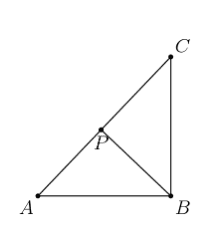
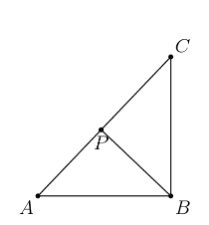
Right triangle $A B C$ has leg lengths $A B=20$ and $B C=21$. Including $\overline{A B}$ and $\overline{B C}$, how many line segments with integer length can be drawn from vertex $B$ to a point on hypotenuse $\overline{A C} ?$

,

  • $5$
  • $8$
  • $12$
  • $13$
  • $15$

Key Concepts


Geometry

Triangle

Pythagoras

Suggested Book | Source | Answer


Suggested Reading

Pre College Mathematics

Source of the problem

AMC-10A, 2018 Problem-16

Check the answer here, but try the problem first

\(13\)

Try with Hints


First Hint

Given that \(\triangle ABC\) is a Right-angle triangle and $AB=20$ and $BC=21$. we have to find out how many line segments with integer length can be drawn from vertex $B$ to a point on hypotenuse $\overline{AC}$?

Let $P$ be the foot of the altitude from $B$ to $AC$. therefore \(BP\) is the shortest legth . $B P=\frac{20 \cdot 21}{29}$ which is between $14$ and $15$.

Now can you finish the problem?

Second Hint

let us assume a line segment \(BY\) with \(Y\) on \(AC\)which is starts from $A$ to $P$ . So if we move this line segment the length will be decreases and the values will be look like as \(20,.....,15\). similarly if we moving this line segment $Y$ from $P$ to $C$ hits all the integer values from $15, 16, \dots, 21$.

Now Can you finish the Problem?

Third Hint

Therefore numbers of total line segments will be \(13\)

Subscribe to Cheenta at Youtube


Finding Greatest Integer | AMC 10A, 2018 | Problem No 14

Try this beautiful Problem on Algebra based on finding greatest integer from AMC 10 A, 2018. You may use sequential hints to solve the problem.

Finding Greatest Integer - AMC-10A, 2018- Problem 14


What is the greatest integer less than or equal to $\frac{3^{100}+2^{100}}{3^{96}+2^{96}} ?$

  • $80$
  • $81$
  • $96$
  • $97$
  • $625$

Key Concepts


Algebra

greatest integer

Suggested Book | Source | Answer


Suggested Reading

Pre College Mathematics

Source of the problem

AMC-10A, 2018 Problem-14

Check the answer here, but try the problem first

$80$

Try with Hints


First Hint

The given expression is $\frac{3^{100}+2^{100}}{3^{96}+2^{96}} ?$

We have to find out the greatest integer which is less than or equal to the given expression .

Let us assaume that $x=3^{96}$ and $y=2^{96}$

Therefore the given expression becoms $\frac{81 x+16 y}{x+y}$

Now can you finish the problem?

Second Hint

Now $\frac{81 x+16 y}{x+y}$

=$\frac{16 x+16 y}{x+y}+\frac{65 x}{x+y}$

$=16+\frac{65 x}{x+y}$

Now if we look very carefully we see that $\frac{65 x}{x+y}<\frac{65 x}{x}=65$

Therefore $16+\frac{65 x}{x+y}<16+65=81$

Now Can you finish the Problem?

Third Hint

Therefore less than \(81\) , the answer will be \(80\)

Subscribe to Cheenta at Youtube